

Ashley Suvarna (Instagram | Twitter)
Half of 2023 is over already, and with it, another season of Kimetsu No Yaiba, or Demon Slayer. There’s no doubt about this being one of the most popular anime of the current generation. The fact that season four was one of the most awaited shows this year only serves to cement that position. The latest Swordsmith Village Arc can best be described as something that feels more like a side quest than a main event. Regulars like Zenitsu and Inosuke are not a part of the team this time, so but instead we’ve got two Hashiras and a new character that was briefly seen in the first season.
The premise is pretty straightforward – our boy wonder Tanjiro Kamado gets his nichirin sword broken yet again. Mr Haganezuka, the ill-tempered smith in charge of forging blades for him, has gone missing, so he has no other option but to journey to the hidden Swordsmith Village in order to get a new sword. However, it looks like one of the Upper Moons has found clues to the location of the village as well, and now two of Muzan’s strongest demons are heading there at the same time. If they succeed in destroying the village, there will no longer be smiths to forge those special anti-demon swords, severely impacting the power of the Slayer Corps.
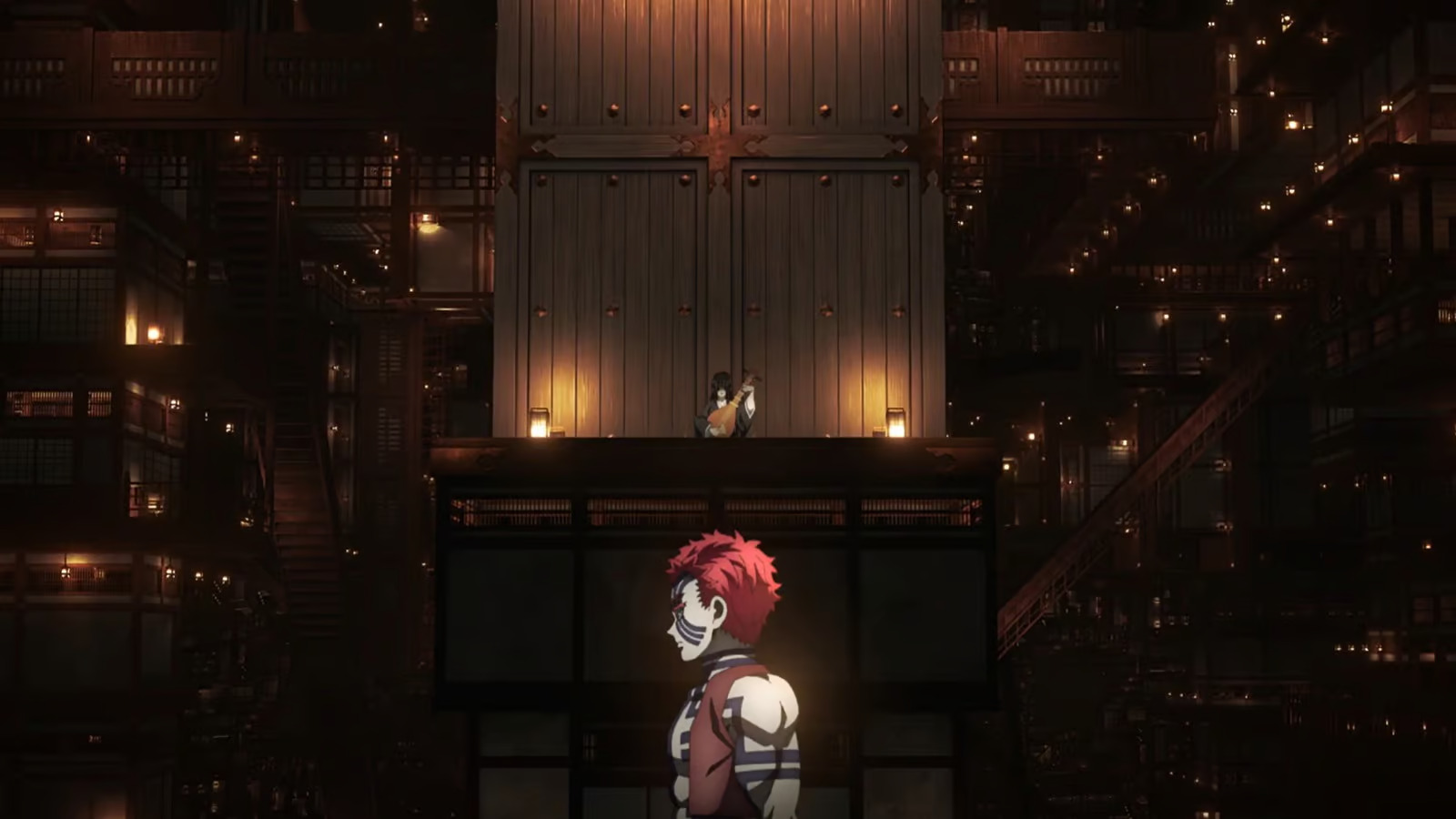
Ufotable’s gorgeous animation has been one of the reasons for this show’s rise to the top, and this time it’s no different. The season begins with a short but jaw-dropping sequence of Muzan’s Infinity Castle that immediately grabs all your attention and sets the tone for the rest of the arc. This is where the studio does what it is best known for: blending 2D and 3D assets seamlessly in a cinematographic work of art. ‘Maybe Ufotable does spend the GDP of a small town on each episode’, you might think to yourself. And who knows, you might be right.
Which is why I was a little surprised when the production quality fell a notch or two around mid-season. More prominently, in terms of the 3D. Yes, I’m talking about the demon fishes. We went from shots like this:
to this
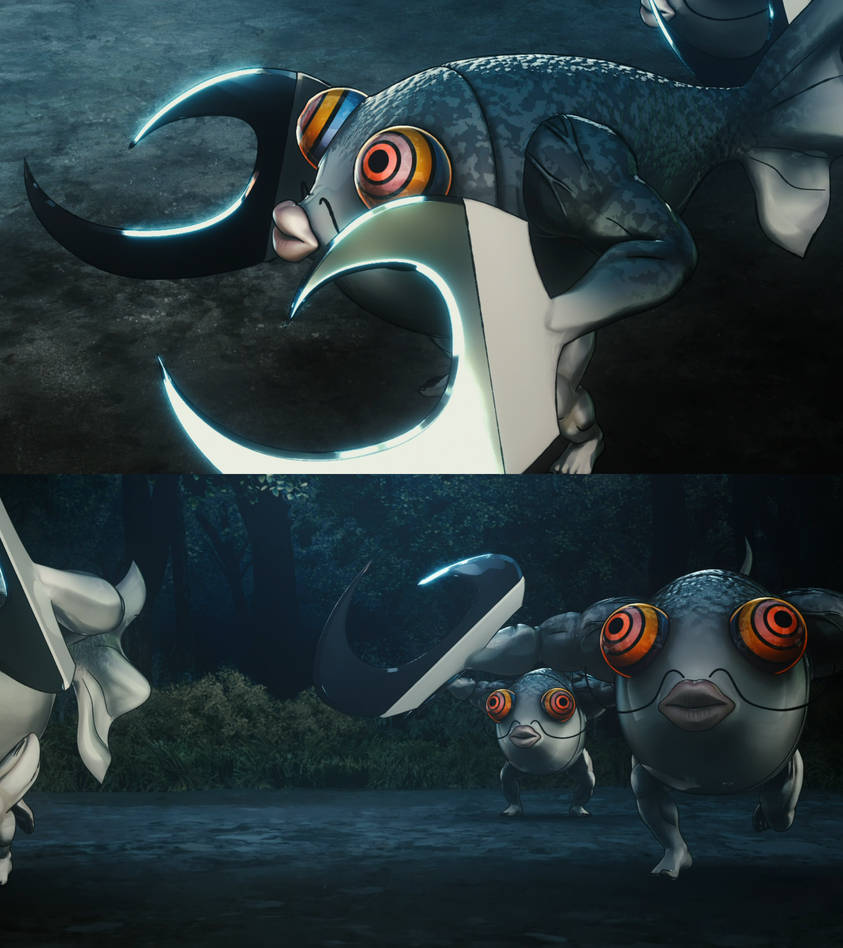
Everything about those fish creatures screamed haphazard production. Could be deadline woes. Could be a lazy streak. It’s hard to tell. Despite how shoddy it was, I personally didn’t think it made as much of a difference as some fans are insisting. Still, I can’t really blame them for being mad about it. After all, this is Ufotable we’re talking about. To put it subtly, a bad pizza in Iran can be forgiven but a bad pizza in Italy cannot. Fortunately, the visual quality across other elements in the show, including other 3D assets, had no such problem. Overall the studio lives up to its reputation, and in certain parts, I daresay even exceeds it.
And let’s not forget a banger of a soundtrack. Demon Slayer wouldn’t be Demon Slayer without the music. Yuki Kajiura (not to be confused with Yuki Hayashi of My Hero Academia) nails it in the sound department with the trademark chanting, the clarinets and oboes seeping through all the synth with just a hint of electronic. Just like the previous seasons, the soundtrack elevates this show even further, making even the most cliched moments feel exciting. At this point, I’d say Demon Slayer’s music has become as much a part of its identity as its characters.
Also Read: Nimona Review – Varied Vibrant Shades Like Its Lead!
But even the best music and visual quality cannot make things work unless there’s good storytelling to back it up. And there is something unique about a show like Demon Slayer, something that makes it stand out in a genre saturated with similar plots and tropes – it reminds us that there is always a cost to victory. The story doesn’t shy away from insisting time and time again that despite how strong our protagonists keep getting, despite how great the Hashiras might be, the demons are ultimately much stronger. This becomes all the more important once the Upper Moons come into the picture. Sure, the good guys can eventually defeat them for the sake of plot progression, but it’s going to take everything and even then, our heroes are not going to come out unscathed. I mean if you think back to the Mugen Train arc, sometimes the losses are too high to even call it a proper victory.
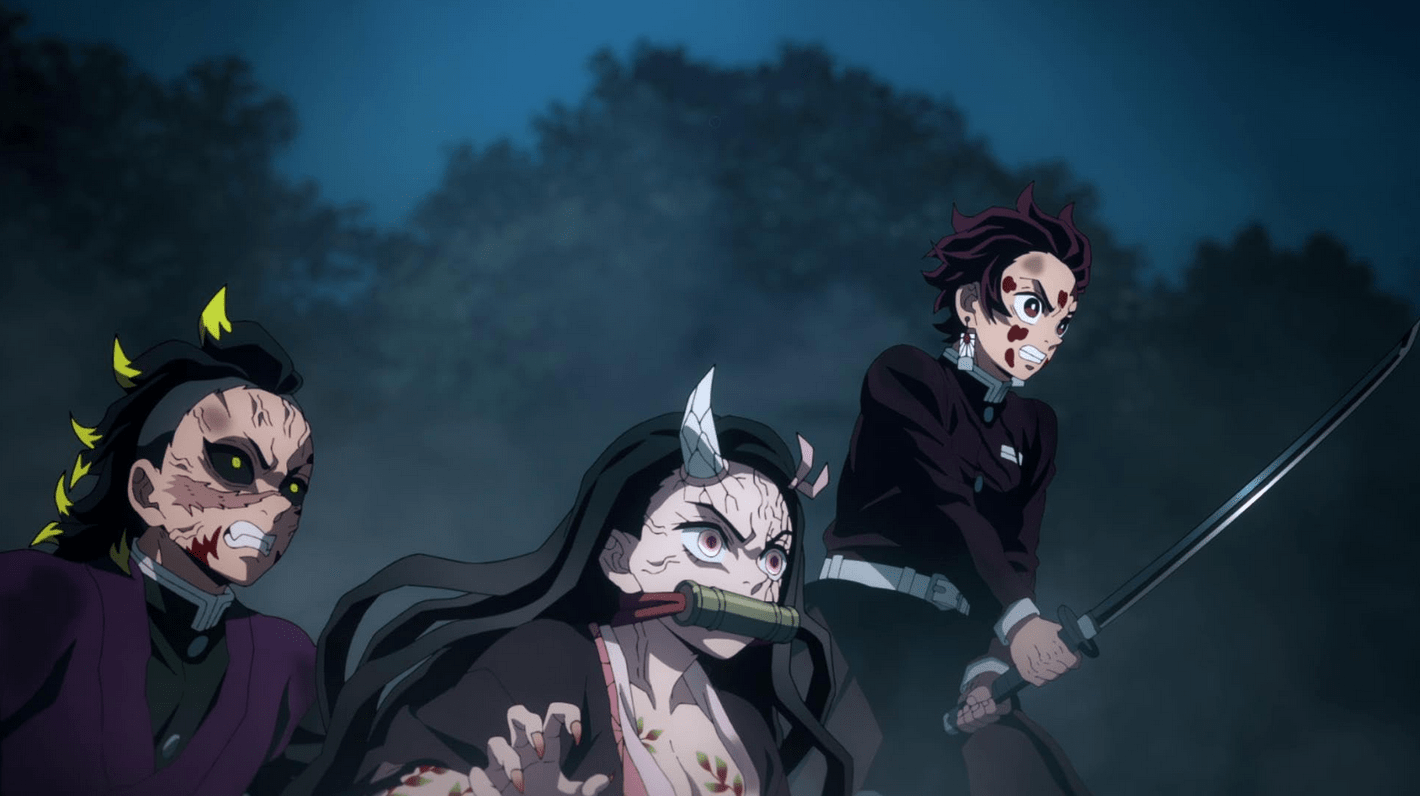
You as a viewer have come to understand that in this universe, winning can be very expensive, and so every time you see Team Tanjiro duke it out with one of Muzan’s elite, you are already expecting some losses by the end. Demon Slayer has a way of piling up the odds and putting the viewer in a state of hopelessness and despair, which is what makes the ensuing moments of triumph worth savoring.
Sadly I felt no such thing with either Gyokko or Hantengu, the big baddies this time, both of whom are supposed to outrank Gyutaro from the last season. Neither of them had that overwhelming presence, nor did they feel like a genuine threat at any point. Hantengu briefly creates a sense of dread when he first appears in Zohakuten form, but for the most part, he just seemed like someone who isn’t scary, just annoying to kill. Gyokko was even worse, a confusingly easy one to deal with, whose death, if you think about it, is only delayed because Muichiro the Mist Hashira wasn’t going all out for most of the encounter. Compare that to the Gyutaro-Daki fight, where the entire team had been giving it their all from the very beginning. And still failing. We are told that Muichiro’s power difference was caused by him awakening the Slayer Mark, and maybe it might come in handy when dealing with someone insanely strong like Kokushibo or Muzan himself, but to be honest it was too much of a powercreep at this point, taking away the thrill of the fight altogether.
The lack of fast combat sequences was also one of the reasons why the demons didn’t feel as imposing. A lot of viewers might think these fights are purely for the adrenaline rush, but in this case they actually help to demonstrate the level of skill needed to go toe-to toe with a ranked demon. If you remember Tengen Uzui from the previous season, poisoned, with one arm lost, stabbed and slashed in the eye, still going on at blistering speeds because he knows if he stopped or slowed down for even a moment, they would all die. That’s what I’m talking about.
Apart from that, the pacing of the story was pretty consistent with the previous seasons, although the flashbacks were pretty annoying at times. You’re about to witness some great action, and then there’s suddenly a backstory or an exposition dump that keeps going on for the rest of the episode, and then just as things finally get back on track, bam, the end credits roll. It killed the immersion on more than one occasion. Even felt frustrating at times. Thankfully, when the action does begin, the show more than makes up for it with some slick VFX and camera work.
Nevertheless, the story of Demon Slayer still has a lot to offer. Muzan is yet to play his best cards, and so does the Slayer Corps. We still have plenty to find out about Tanjiro’s connection to Yoriichi, the first demon slayer, a mysterious figure who fought Muzan single handedly and wrecked him so hard, even his blood has PTSD. Judging by the twist at the end of the season, Tanjiro and his half-demon sister Nezuko now have the attention of the Demon King himself. The stakes have been increased, and if the narration is anything to go by, we seem to be getting very close to the beginning of the end.
I would still rank the Entertainment District Arc higher than the Swordsmith Village in terms of story and execution. This may have been an enjoyable season, but is quite far from being this franchise’s best.
You can stream the series on Netflix and Crunchyroll.

Wow, it felt like you’ve read my mind and understood my feelings for this Seasons better than I did! Thanks for the review!
Glad you liked it, Theo.