

Follow us on Twitter | Instagram
Let’s take a moment to talk about Sekhmet – the Egyptian goddess who’d probably win in a fight against any mythological figure you can name. Her name means “The Powerful One,” which feels like an understatement. Imagine a lioness with divine powers, a short temper, and a job description that includes smiting enemies, keeping chaos at bay, and occasionally bringing plagues – just for balance. Sekhmet wasn’t just fierce; she was the very definition of fierce. Which is why she makes the perfect fit to inspire the primary antagonists in Netflix animated series ‘Castlevania: Nocturne’ in season 2.
Sekhmet in the Fictional World of Castlevania
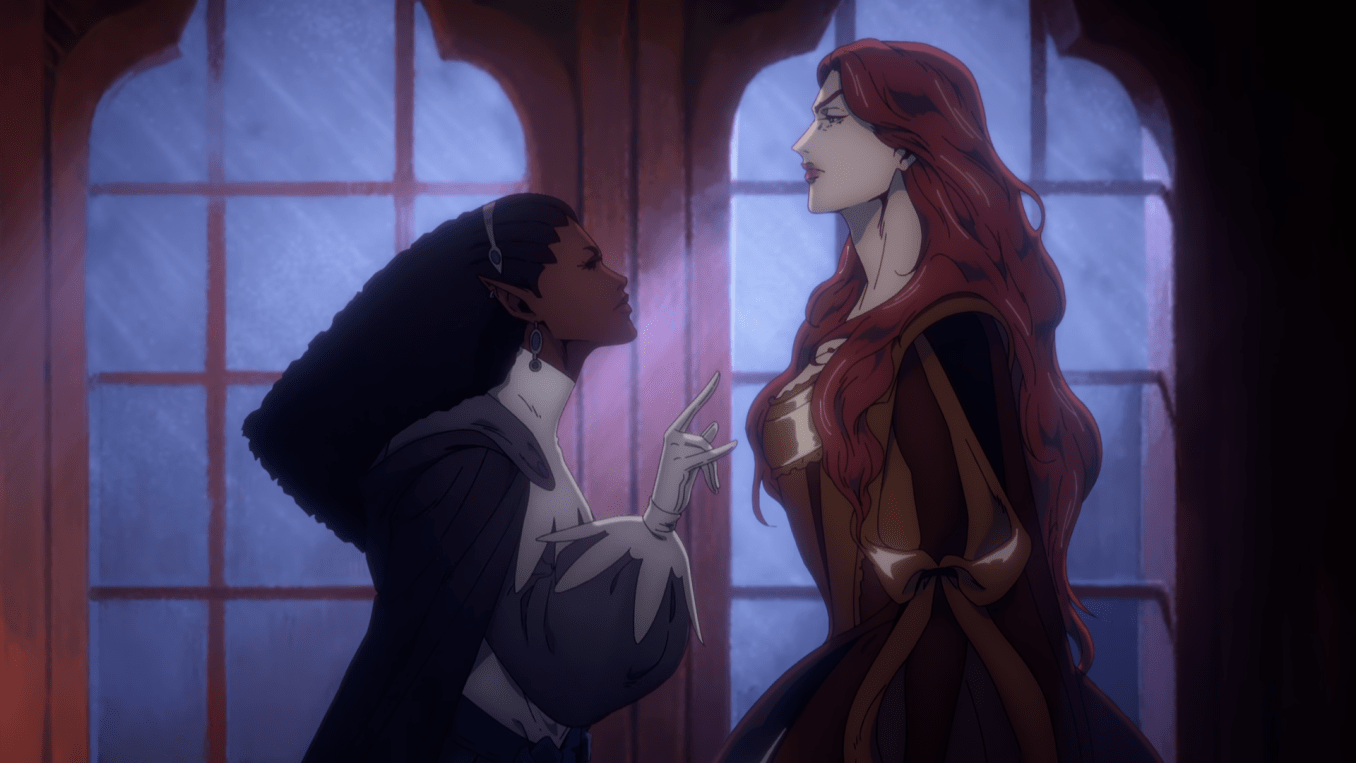
Erzebet Bathory, the Vampire Queen who wants to swallow the moon for good in the show and take over the world, draws her strength from Sekhmet’s blood in the series. In flashbacks, we learn how Drolta, the vampire, used to be a priestess at Sekhmet’s tomb. In the fictional world of Castlevania, legend goes that only a rare few can survive if they drink Sekhmet’s blood, which is preserved in her tomb. To ensure her goddess walks on earth again, Drolta becomes a vampire and begins to hunt the ‘vessel’ who could become the next Sekhmet.
Finally, she learns about Erzebet, an infamous countess imprisoned for drinking the blood of countless young girls just to preserve her youth and beauty. Drolta’s doubts prove right, and Erzebet indeed doesn’t perish after consuming Sekhmet’s blood but instead becomes incredibly powerful. Together, the two women plot to take over the reins of power in France first.
If you’re a Castlevania fan and love Egyptian lore, let’s dive into Sekhmet’s story, the beliefs surrounding her, and why she’s still fascinating today.
The Lioness of Ra
Sekhmet was no ordinary goddess. She was the daughter of Ra, the sun god and king of the Egyptian pantheon. According to myth, Ra’s enemies were getting a little too bold, questioning his power and causing trouble. Ra decided he needed a little divine enforcement, so he sent Sekhmet to sort things out. But Sekhmet didn’t just “sort things out.” She went on a rampage that would make any Marvel villain look like a puppy.
Sekhmet’s weapon of choice? Her fiery breath, said to scorch the desert. She was depicted as a lioness because lions, much like Sekhmet, don’t ask questions before asserting dominance. And her ferocity wasn’t just physical; Sekhmet was also associated with plagues. You could say she was the goddess of both “fight” and “flight,” as she’d either protect you or send a disease your way—depending on her mood.
The Bloodthirsty Tale
One of Sekhmet’s most famous myths is the story of how she nearly wiped out humanity. Ra, feeling disrespected by humans, sent Sekhmet to teach them a lesson. She did her job—a little too well. Sekhmet’s bloodlust kicked in, and she went on an unstoppable killing spree. Her thirst for blood became literal; she drank it up like it was happy hour at the Nile.
Realizing that his creation was about to become extinct, Ra hatched a plan to stop Sekhmet. He ordered his priests to brew up a huge batch of beer and dye it red with pomegranate juice to make it look like blood. When Sekhmet stumbled upon this river of “blood,” she couldn’t resist. She drank and drank until she passed out. When she woke up, her rage was gone, and humanity was safe. Moral of the story? Always keep a stash of beer handy if you’re dealing with Sekhmet.
Dual Nature: Protector and Destroyer
Sekhmet wasn’t all about chaos and destruction, though. Like many Egyptian deities, she had a dual nature. On one hand, she was the goddess you’d pray to if your enemies were getting out of line. On the other, she was also a healer and a protector.
In her gentler moments, Sekhmet was associated with physicians and surgeons. She was called upon to ward off diseases and ensure health. Her priests were said to be skilled healers who blended spiritual rituals with practical medicine. If you got sick in ancient Egypt, you’d want Sekhmet on your side—but you’d also want to stay on her good side. The Egyptians believed that if you angered her, she could just as easily send sickness your way as she could cure it.

Sekhmet’s Temples and Worship
Sekhmet’s followers were devoted, and it’s easy to see why. Who wouldn’t want a goddess with lion-like ferocity and healing powers on their team? Her main cult center was in Memphis, Egypt, where she was worshipped alongside her husband, Ptah (the god of craftsmen and architects), and their son, Nefertum (god of healing and beauty).
One of the most intriguing rituals associated with Sekhmet was the “pacification” ceremony. Every year, her priests and followers would hold a festival to calm her temper. This involved music, dancing, and (of course) beer—a nod to the myth of how she was pacified with red-dyed beer. These festivals were not just about keeping Sekhmet happy; they were also times of celebration, honoring her as both a fierce protector and a benevolent healer.
Sekhmet in Art and Symbolism
Sekhmet’s iconic image was that of a lion-headed woman, often wearing a solar disk and a uraeus (a rearing cobra) on her head. The solar disk signified her connection to Ra, while the cobra symbolized her protective and destructive power. Her statues were placed in temples and tombs as guardians, meant to ward off evil and ensure balance.
In some depictions, she holds an ankh (symbol of life) in one hand and a scepter in the other, showcasing her role as both a giver and taker of life. Her presence was meant to inspire awe and a healthy dose of fear—the kind of energy that says, “Don’t mess with me or the people I protect.”
Sekhmet’s Legacy
Even today, Sekhmet’s story resonates. She’s a symbol of feminine strength, duality, and the fine line between creation and destruction. Modern interpretations of Sekhmet often portray her as a fierce feminist icon, embodying empowerment and resilience. Whether you see her as a warrior, a healer, or a little bit of both, there’s no denying her influence on mythology and popular culture.
In a world that’s often chaotic, Sekhmet reminds us of the power of balance—and the importance of knowing when to unleash your inner lioness and when to calm it with a metaphorical glass of red-dyed beer. So the next time life feels overwhelming, channel your inner Sekhmet. Be fierce, but don’t forget to celebrate and heal, too. And if all else fails, remember: sometimes, a little beer can save the day.