

Sneha Jaiswal (Twitter | Instagram)
“It is difficult to be forgotten, but it is something that will happen to us all.”
Rudger is a blonde-haired, blue-eyed boy born out of the imagination of Amanda, and the day of his creation looks like it is out of the French novella “The Little Prince” by Antoine de Saint-Exupéry. Only Amanda can see Rudger, and the two of them go on magical adventures after school. However, when Amanda meets with an accident, Rudger faces the threat of being forgotten. He finds himself in a town inhabited by ‘imaginaries,’ a term for imaginary friends like him, and despite a chance at new adventures, Rudger tries to get back to Amanda to make sure she is okay.
Directed by Yoshiyuki Momose, Studio Ponoc’s “The Imaginary” is based on the novel of the same name by British novelist A.F. Harrold. Interestingly, Studio Ponoc’s animated movie “Mary and the Witch’s Flower” was also based on British novelist Mary Stewart’s work. Well, British inspiration aside, this Japanese film is a delightful escape from realities, re-imagining one’s childhood imaginary friends as real entities who disappear once children forget about them. But Rudger and Amanda make a special promise to each other – no matter what happens, never disappear, always protect each other, and never cry.
Rudger and Amanda’s friendship reminded me of Studio Ghibli’s “Ponyo,” a re-imagination of “The Little Mermaid,” where a little boy becomes best friends with a girl from the sea, so she hopes to become a human and stay with her friend on land forever. “The Imaginary” might not be as energetic, fantastical, and hilariously endearing as “Ponyo,” but it does its theme of friendship justice. The imaginaries become metaphors for childhood friends we might’ve cherished as kid before losing touch. Rudger and Amanda don’t get to spend a lot of time together before they are torn apart, so some more scenes of playtime between the two friends would’ve given “The Imaginary” more emotional punch.
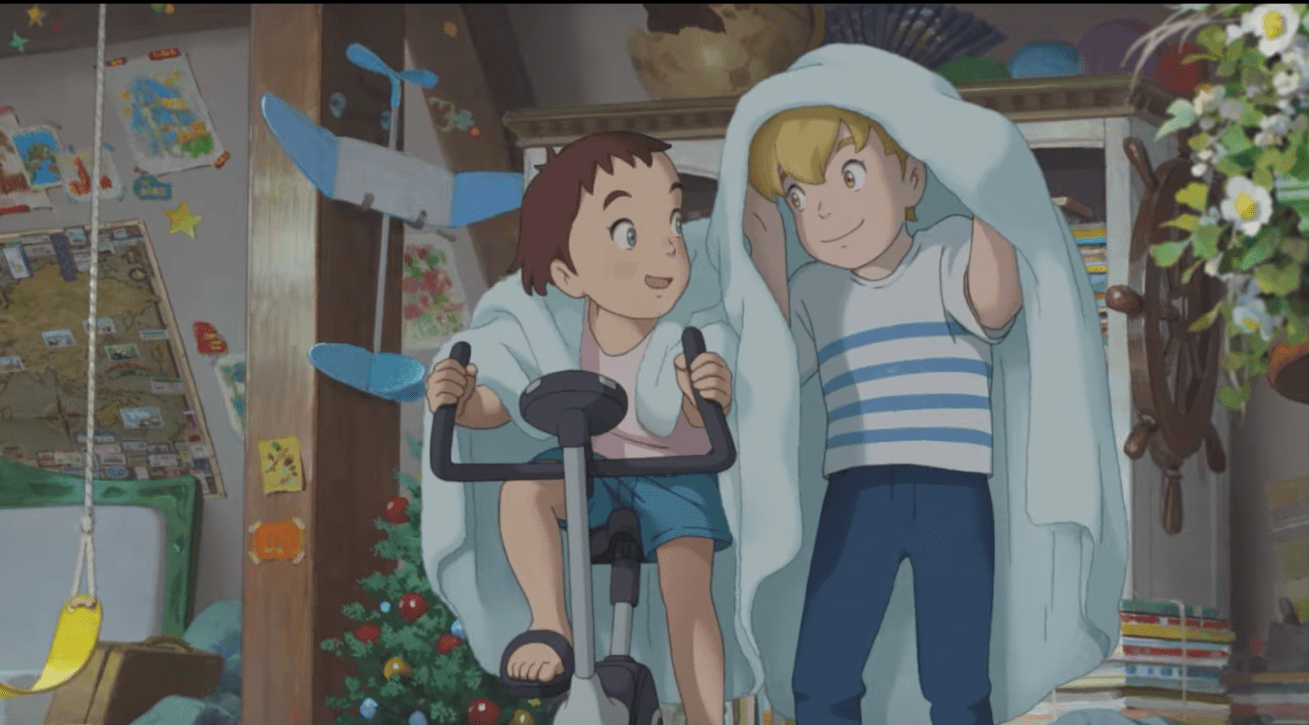
The primary antagonist of the film is Mr. Bunting, an intimidating man who still walks around with his imaginary friend, a young gothic girl who seems to be either inspired by Wednesday Addams or the ghost from “Ringu.” Mr. Bunting is after Rudger, so Rudger must keep himself safe from the villain while he tries to get back to Amanda. A lot of the character designs aren’t wholly original, and one wishes Studio Ponoc could’ve done a little more work with at least Amanda and Rudger’s characters. Regardless, the animation is engaging, with some of the fantasy scenes managing to be captivating in nature. Although, overall, you cannot help but think that it lacks the effervescent charm of the hand-drawn animation of older Studio Ghibli movies. But given that director Yoshiyuki Momose was a key animator for several Ghibli movies (“Spirited Away,” “Whisper of the Heart,” to name a few), “The Imaginary” is a worthy consolation prize for Ghibli nostalgists.
I liked how the writers weave the story of Amanda’s mother in “The Imaginary,” who finds having to deal with her daughter’s pretend friend exhausting, until her mother reminds her how she too had an imaginary friend as a child. Of course, the whole imaginary friends concept has no logical conclusion except for giving viewers a magical break into the world of unlimited possibilities and weird-looking imaginary friends.
Rating: 6.5 on 10. You can stream “The Imaginary” on Netflix.
Read Next: The Boy and the Heron Review – Dreamy and Disjointed
Also Read: Wives and Daughters – Book Review (Audio Version Below)
